Sports Injuries in Sterling, Virginia: How to Deal with It!

Sports Injuries in Sterling, Virginia: How to Deal with It!

Sports injuries are part and parcel of the life of an athlete or active adult. These professionals need to go through severe physical exertions every day to sustain high-performance levels. Unfortunately, continuing to do so makes the body susceptible to injuries as specific muscles give in after intensive sessions.

Treatment begins mostly through physical therapy whenever an active adult sustains an injury. Medical procedures are necessary. However, physical therapy is considered the silent healer, and the final step toward achieving

The post Sports Injuries in Sterling, Virginia: How to Deal with It! appeared first on Gym Junkies.

The Difference Between Cold-Pressed and Refined Oils

The Difference Between Cold-Pressed and Refined Oils

Oils play a crucial role in our diet, providing essential fatty acids, antioxidants, and fat-soluble vitamins. However, not all oils are created equal. One of the key distinctions is whether an oil is cold-pressed or refined. The difference in processing affects not only the nutritional value but also the taste, aroma, and overall health benefits of the oil.

Cold-Pressed Oils: The Purest Form

Cold-pressed oils are extracted through mechanical pressing without the use of heat or chemical solvents. The process typically involves crushing the seeds, nuts, or fruits and slowly pressing them to extract oil. Because the temperature remains low (usually below 49°C or 120°F), the oil retains its natural nutrients, enzymes, and antioxidants.

Benefits of Cold-Pressed Oils:

  • Nutrient-Dense: Since they are minimally processed, cold-pressed oils retain vitamins (such as vitamin E and K) and essential fatty acids.
  • Rich in Antioxidants: These oils contain natural antioxidants like polyphenols and tocopherols, which help combat free radicals and support overall health.
  • Better for Digestion: Cold-pressed oils are more easily digested and utilized by the body compared to refined oils.
  • Unaltered Flavor & Aroma: The natural taste and scent remain intact, making them ideal for dressings, dips, and finishing touches on meals.
  • Less Processing = Fewer Chemicals: No bleaching, deodorizing, or chemical extraction is involved, making these oils a cleaner and healthier choice.

Examples of Cold-Pressed Oils and Their Benefits:

  1. Extra Virgin Olive Oil: High in monounsaturated fats and polyphenols, it supports heart health, reduces inflammation, and has strong antioxidant properties.
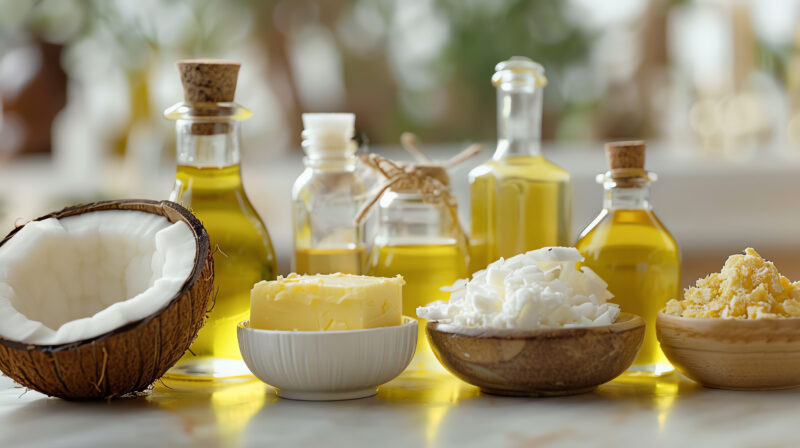
  2. Coconut Oil: Contains medium-chain triglycerides (MCTs) that provide quick energy and support brain function. Also has antibacterial and antifungal properties.
  3. Flaxseed Oil: A rich source of omega-3 fatty acids (ALA), beneficial for brain health and reducing inflammation. Best consumed raw.
  4. Avocado Oil: High in monounsaturated fats and vitamin E, great for skin health and cardiovascular support.
  5. Sesame Oil: Packed with lignans and antioxidants, known for its anti-inflammatory properties.

Refined Oils: Highly Processed for Shelf Stability

Refined oils go through extensive processing, including heat treatment, chemical solvents (such as hexane), bleaching, and deodorization to remove impurities, extend shelf life, and create a neutral taste. This process can strip the oil of essential nutrients and antioxidants, making it less beneficial for health.

Reasons Why Oils Are Refined:

  • To remove strong flavors and odors (creating a more neutral-tasting oil).
  • To increase the smoke point, making it suitable for high-heat cooking and frying.
  • To remove natural pigments and impurities, creating a lighter, clearer appearance.
  • To improve shelf stability by preventing oxidation.

Downsides of Refined Oils:

  • Nutrient Loss: The high heat and chemical processing destroy vitamins, antioxidants, and beneficial compounds.
  • Contains Residual Solvents: Some refined oils may contain traces of chemical solvents used in extraction.
  • More Susceptible to Oxidation: The refining process removes natural antioxidants, making these oils more likely to turn rancid and produce harmful free radicals when heated.

Examples of Refined Oils and Their Uses:

  1. Canola Oil: Often genetically modified and heavily processed, canola oil is high in omega-6 fatty acids, which can contribute to inflammation if consumed in excess.
  2. Vegetable Oil (Soybean, Corn, Sunflower): Highly processed and lacking natural nutrients, often used in processed foods and fast-food frying.
  3. Refined Palm Oil: Used in packaged foods due to its long shelf life but often comes from unsustainable sources.
  4. Refined Coconut Oil: Has a higher smoke point than virgin coconut oil but lacks some of the antimicrobial benefits.
  5. Refined Sunflower Oil: Stripped of its natural vitamin E and prone to oxidation when heated.

Which One Should You Choose?

  • For Raw Consumption (Salads, Dressings, Drizzles): Always opt for cold-pressed oils like extra virgin olive oil, flaxseed oil, and avocado oil.
  • For Cooking (Low to Medium Heat): Virgin coconut oil and cold-pressed sesame oil work well.
  • For High-Heat Cooking: If you need an oil with a high smoke point, go for avocado oil or a naturally refined option like high-oleic sunflower oil.
  • Avoid highly processed oils (such as canola, soybean, and vegetable oil) whenever possible, as they lack nutrients and can contribute to inflammation.

By choosing cold-pressed oils over refined oils, you are opting for a healthier, more nutrient-dense option that provides real benefits to your body. While refined oils may be more convenient and longer-lasting, they come at the cost of lost nutrients and potential health risks. Investing in high-quality oils can make a significant difference in your overall health, supporting everything from brain function to heart health and inflammation reduction.

The post The Difference Between Cold-Pressed and Refined Oils appeared first on Total Gym Pulse.

5 Tips That Can Help You Pack on Strength and Muscle

5 Tips That Can Help You Pack on Strength and Muscle

There are many reasons people go to gyms. Some want a healthy lifestyle, some want to lose weight, and others need to gain muscle mass or bulk up. If the latter is your goal, you’ll want to make sure your gym routine is tailored specifically for that purpose.

Otherwise, you’ll likely be wasting your time, or worse, harming your body. Remember that it’s harder to build muscle than to lose weight, so don’t be discouraged if you do not see

The post 5 Tips That Can Help You Pack on Strength and Muscle appeared first on Gym Junkies.

Yoga with Friends: 7 Great Reasons To Do Yoga With Your BFFs

Yoga with Friends: 7 Great Reasons To Do Yoga With Your BFFs

Friends make everything better. Any activity that you do with friends is not only more entertaining, but it also ensures that you complete the task, which you may not be able to achieve if you do it alone.

Involving a friend is a fantastic idea if you have trouble staying consistent with your fitness routine.

If you practice yoga but face trouble sticking to it, getting a friend to join you may help.

A friend can make you feel more

The post Yoga with Friends: 7 Great Reasons To Do Yoga With Your BFFs appeared first on Gym Junkies.

Spring is Here — and It’s Time for an Inner Reset! 🌱

Spring is Here — and It’s Time for an Inner Reset! 🌱

Every spring, we naturally get the urge to clean up — we freshen our homes, declutter our closets, and sweep out the dust. But how often do we think about cleaning up inside our bodies?

Just like nature wakes up and renews itself, our bodies are asking for the same. When we clean out the buildup in our digestive system, we free up energy for our cells to perform better — giving us more vitality, better moods, and stronger immune function.

– The truth is, when our gut is sluggish, everything feels sluggish — digestion, thinking, energy, and even our skin!

But how do you “spring clean” your body safely?
Not by jumping into an extreme cleanse.
Fast, harsh detoxes can do more harm than good. They often shock the system, cause uncomfortable reactions like diarrhea or cramps, and don’t create lasting change.

Instead, think of it like tending a garden — gently, consistently, and with care.

Understanding Poor Elimination:

When we eat processed foods, deal with stress, or simply don’t get enough fiber and water, our digestion slows down. Instead of moving food waste efficiently out of the body, the intestines hold onto it — sometimes for days!

This leads to:

  • Bloating and gas
  • Constipation (less than 1-2 bowel movements per day)
  • Feeling heavy, tired, and “backed up”
  • Bad breath or coated tongue
  • Poor absorption of nutrients
  • Weakening of the immune system (since 70% of it is in the gut!)

Over time, poor elimination means that waste materials ferment, creating harmful bacteria that can “leak” into the bloodstream — leading to inflammation, brain fog, joint pain, skin issues, and much more.

Good elimination means moving your bowels at least two -three times a day , with ease — no straining, no urgency, no incomplete feeling after.
It should be quick, clean, and complete — you shouldn’t even need a lot of toilet paper if your digestion is truly healthy!

5 Simple Ways to Gently Cleanse Your Body This Spring:

  1. Cut out processed, lifeless foods.
    Packaged cereals, frozen dinners, canned foods, boxed snacks — they’re loaded with preservatives, dyes, and additives.
    Your cells simply don’t recognize these as real nourishment — and when they linger in your gut, they weaken digestion and feed the wrong kind of bacteria.
  2. Choose whole, real foods.
    Ditch refined grains, conventional dairy, and processed sugars that can cause bloating and sluggish digestion.
    Stick to organic, simple, recognizable foods — the way nature intended.
  3. Read labels carefully.
    Watch for hidden toxins like “natural flavors,” cheap seed oils (like canola or sunflower oil), and excessive preservatives — even in foods that claim to be “healthy” or “gluten-free.”
  4. Eat more raw fruits and vegetables.
    Raw foods are packed with living enzymes that naturally help your body digest and detoxify.
    Aim to have at least a few handfuls of raw fruits or vegetables every single day.
  5. Hydrate — with good quality water.
    Water is essential for flushing out toxins.
    Aim for 2–3 liters a day — and if you can, drink spring water, filtered water, or eat more organic raw produce, which contains the cleanest water nature offers.
    (Avoid tap water whenever possible — it’s loaded with chemicals like chlorine and fluoride.)

The post Spring is Here — and It’s Time for an Inner Reset! 🌱 appeared first on Total Gym Pulse.

Cool Fuel: Beat the Summer Heat & Power Your Body

Cool Fuel: Beat the Summer Heat & Power Your Body

Maria Sollon, MS, CSCS, PES

Hot days demand more from your body, especially when you’re training hard, sweating often, and chasing goals that don’t take summers off. Hydration becomes your edge. It fuels your workouts, supports recovery, and keeps every system performing at its best.

To help you stay fueled, refreshed, and energized in the heat, here are three crave-worthy recipes that deliver more than just cool, satisfying flavor. These summer staples are functional fuel. Each one helps replenish what your body loses through sweat while delivering nutrients that support hydration, recovery, and stamina.

From post-workout hydration to sun-soaked recovery, consider these your warm-weather essentials. Clean ingredients. Craveable flavor. Serious benefits.

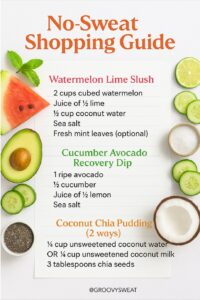
No-Sweat Shopping Guide

Remembering every ingredient for every recipe can be frustrating — especially when you’re at the store and can’t find the recipe. (I’ve been there… and yep, left without half of what I needed!) That’s why I’ve made it simple.

This clean, streamlined grocery list gives you everything you need for all three “Cool Fuel” recipes in one shot. No guesswork. No scrolling back to double-check. Just print it, screenshot it, or take it with you so shopping is one less thing to sweat about.
Cool Fuel: The Best Recipes Youll Crave All Summer

Get your blender ready… it’s time to mix, shake, and sip your way to better hydration, faster recovery, and flavor that fuels your summer vibe!

Each of these recipes is clean, crave-able, and created with a purpose. Whether you need a post-workout recharge or a sun-friendly sip to cool down, there’s something here for every sweaty scenario.

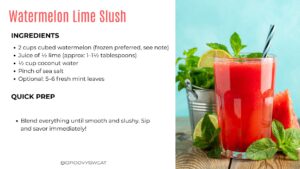
#1: Watermelon Lime Slush

Ingredients:

  • 2 cups cubed watermelon (frozen preferred, see note)
  • Juice of ½ lime (approx: 1–1½ tablespoons)
  • ½ cup coconut water
  • Pinch of sea salt
  • Optional: 5–6 fresh mint leaves

Quick Prep:
Blend everything until smooth and slushy. Sip and savor immediately!

Note:
Frozen watermelon gives it that frosty slush texture. If using fresh, just toss in a handful of ice!

Why Your Body Needs This:
Watermelon is hydration disguised as dessert.  It’s over 90 percent water, packed with potassium, and helps restore fluid balance after you sweat. Lime adds vitamin C and metabolism support. That pinch of salt? It replaces sodium lost during workouts, keeping your muscles and nerves firing properly. Mint just makes you feel like you’re on vacation, even if you’re standing in your kitchen with a blender.
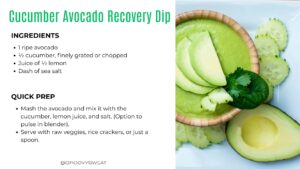
#2: Cucumber Avocado Recovery Dip (Dairy-Free)

Ingredients:

  • 1 ripe avocado
  • ½ cucumber, finely grated or chopped
  • Juice of ½ lemon
  • Dash of sea salt

Quick Prep:
Mash the avocado and mix it with the cucumber, lemon juice, and salt. (Option to pulse in blender). Serve with raw veggies, rice crackers, or just a spoon. No judgment.

Why Your Body Needs This:
Avocados give you healthy fats and potassium, both crucial for post-workout recovery and muscle function. Cucumber hydrates from the inside out. Lemon supports digestion and helps your body absorb nutrients better. Plus, when it’s too hot to cook, this is basically your green light to eat guac for dinner, but with extra benefits.

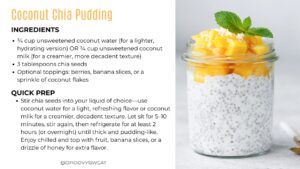
#3: Coconut Chia Pudding (2 Ways)

Hydrating or indulgent? You choose the texture.

Ingredients:

  • ¾ cup unsweetened coconut water (for a lighter, hydrating version)
    OR
  • ¾ cup unsweetened coconut milk (for a creamier, more decadent texture)
  • 3 tablespoons chia seeds
  • Optional toppings: berries, banana slices, or a sprinkle of coconut flakes

Quick Prep:

Stir chia seeds into your liquid of choice—use coconut water for a light, refreshing flavor or coconut milk for a creamier, decadent texture. Let sit for 5–10 minutes, stir again, then refrigerate for at least 2 hours (or overnight) until thick and pudding-like. Enjoy chilled and top with fruit, banana slices, or a drizzle of honey for extra flavor.

Why Your Body Needs This:
Chia seeds absorb liquid and help the body retain hydration longer. They also deliver omega-3s, fiber, and plant-based protein in one bite. Coconut water is nature’s electrolyte drink with no added sugars and no neon sports drink bottles required. This pudding cools you down, fuels recovery, and actually leaves you satisfied instead of sluggish.

Cool & Fueled…

Summer isn’t the time to overcomplicate nutrition. It’s the time to get smart, stay cool, and fuel in a way that works with your training — not against it. These three recipes are simple, refreshing, and recovery-ready with ingredients your body will love.

Stay cool. Stay fueled. Keep moving strong.

Maria

@GROOVYSWEAT

Let’s Connect on Social Media

The post Cool Fuel: Beat the Summer Heat & Power Your Body appeared first on Total Gym Pulse.

Understanding the Vagus Nerve and Its Powerful Influence

The Gut-Brain Connection: Understanding the Vagus Nerve and Its Powerful Influence

We’ve all heard the saying “trust your gut,” but few people realize just how deeply connected our gut is to our brain. This powerful connection is largely driven by the vagus nerve, the longest cranial nerve in our body, which acts as a communication superhighway between our digestive system and our brain.

What is the Vagus Nerve?

The vagus nerve, also known as the 10th cranial nerve, begins at the brainstem and meanders its way through the neck, chest, and abdomen, finally ending at the colon. It is responsible for transmitting information back and forth, influencing everything from mood and immune response to digestion and heart rate. This nerve is the main component of the parasympathetic nervous system, which is often referred to as the “rest and digest” system.

But here’s the critical question: Can the vagus nerve function optimally when the gut is compromised and filled with bad bacteria?

How Gut Health Impacts Vagus Nerve Function

When the gut microbiome is unbalanced—overrun with bad bacteria and lacking in diversity—communication through the vagus nerve is disrupted. This can lead to poor mood, anxiety, lack of focus, and even depression. An inflamed gut sends distress signals through the vagus nerve to the brain, which can trigger mood swings, foggy thinking, and even mental health challenges. This is why addressing gut health is so crucial for mental well-being.

Moreover, the majority of serotonin—commonly known as the “happy hormone”—is actually produced in the gut, not the brain. This explains why many people do not find relief from SSRIs (Selective Serotonin Reuptake Inhibitors), which only attempt to increase serotonin levels in the brain. If the gut is not healthy, serotonin production is impaired, and no amount of brain-focused medication can truly solve the problem.

How to Stimulate Vagus Nerve Function

Fortunately, there are natural ways to stimulate and support healthy vagus nerve function:

  1. Humming and Chanting – These create vibrations that activate the vagus nerve.
  2. Deep Breathing Exercises – Slow, deep breaths stimulate the parasympathetic nervous system and enhance vagus nerve activity.
  3. Cold Showers or Hot/Cold Baths – Exposure to contrasting temperatures has been shown to activate vagus nerve response and improve resilience to stress.
  4. Meditation and Yoga – These practices help to calm the mind and activate parasympathetic healing responses.

Building a Healthy Gut for a Happy Mind

To truly support vagus nerve health, focusing on the integrity of the gut microbiome is essential. Consuming a diet rich in diverse, whole foods, fermented foods like sauerkraut and kefir, and high-fiber vegetables and fruits can help restore balance and feed the beneficial bacteria in your gut. When your gut is happy, your mind is too.

Final Thoughts

The gut-brain connection is real and powerful. When your gut is in good health, your thoughts are clearer, your mood is brighter, and your ability to focus is stronger. By taking steps to nourish your gut and stimulate the vagus nerve, you are not only supporting your digestive health but also your mental well-being.

The post Understanding the Vagus Nerve and Its Powerful Influence appeared first on Total Gym Pulse.